World Hyena Day: Understanding the Spotted and Brown Hyena
Every year on 27 April, conservationists and wildlife enthusiasts recognize World Hyena Day — a day dedicated to raising awareness about one of Africa’s most misunderstood carnivores.
Hyenas are often unfairly portrayed as cowardly scavengers or comic villains. In reality, they are intelligent, socially complex, and ecologically essential predators. In Southern Africa, two species dominate the landscape: the Spotted Hyena and the Brown Hyena. Although closely related, they differ significantly in behaviour, appearance, and ecological role.
Understanding these differences not only enhances a safari experience — it deepens appreciation for the delicate balance of the bush.
The Spotted Hyena
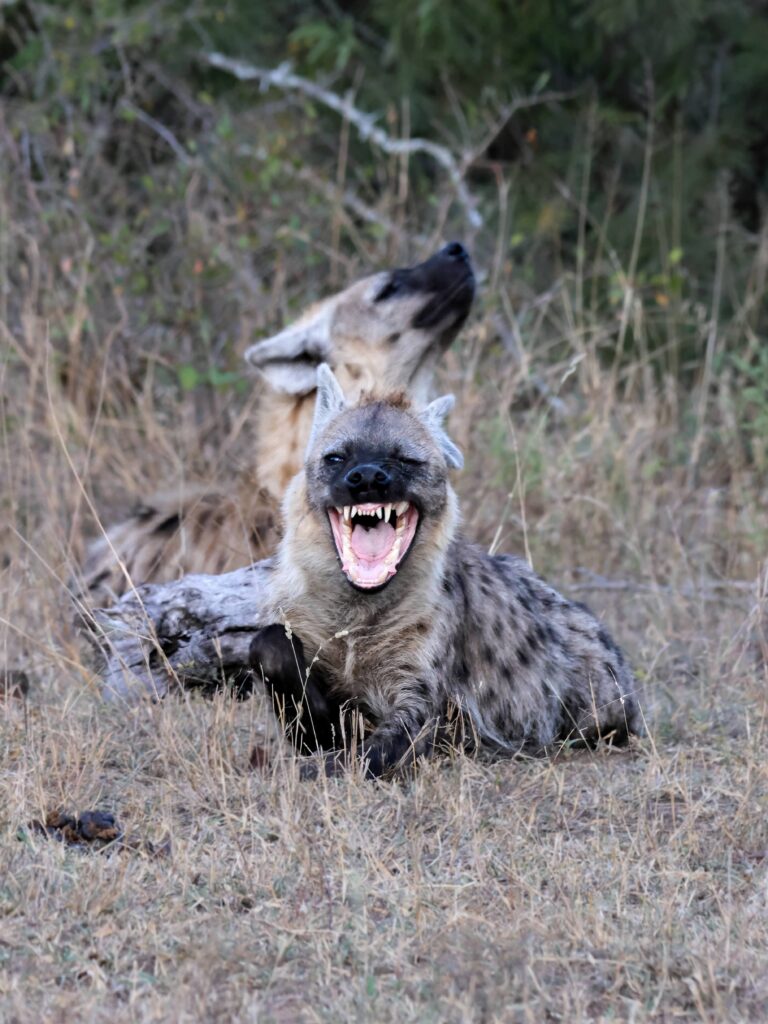
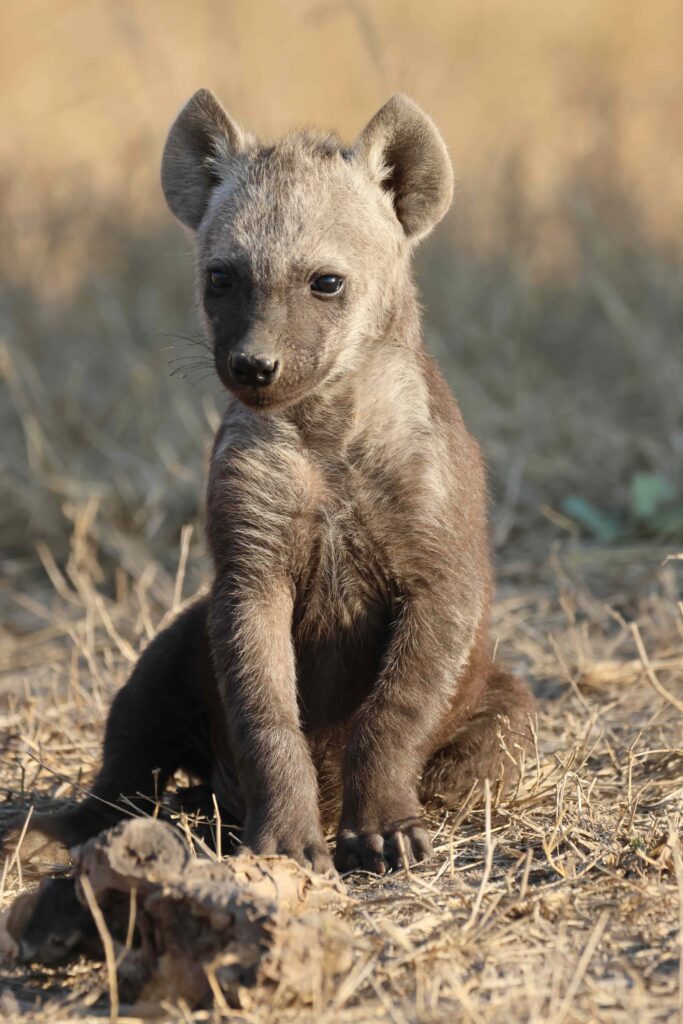
The Spotted Hyena is the largest and most widespread hyena species in Africa. Recognizable by its sandy coat covered in dark spots, rounded ears, and powerful sloping back, it is built for strength and endurance.
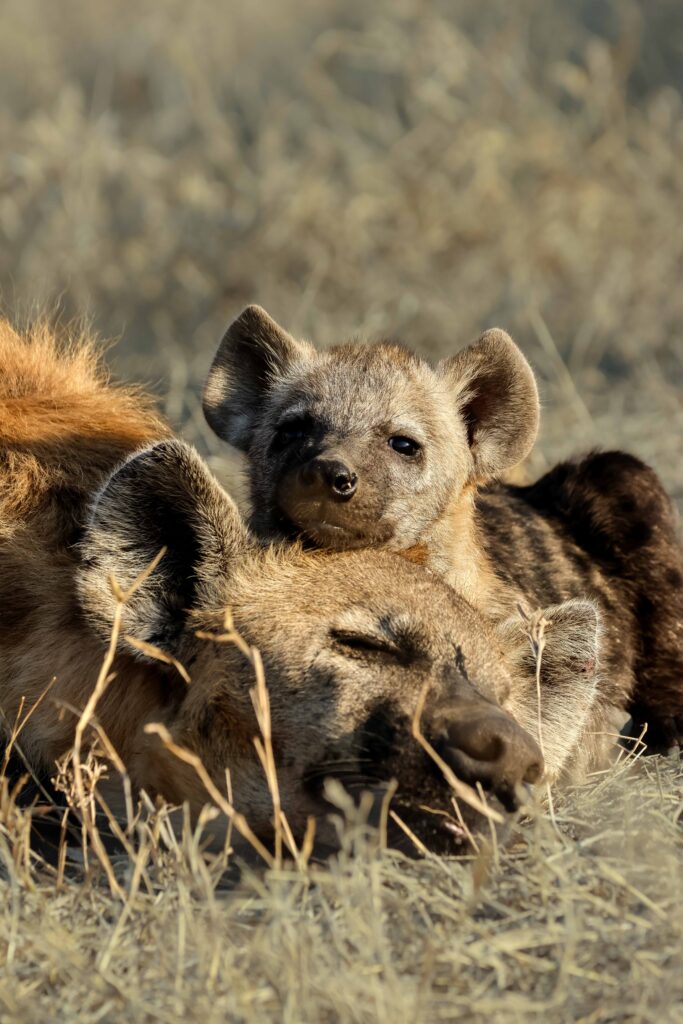
Spotted hyenas live in structured social groups known as clans, which can range from a handful of individuals to as many as 80 members. These clans are matriarchal — females are larger, more dominant, and lead the social hierarchy. Their intelligence rivals that of primates, with studies showing advanced problem-solving skills, complex communication, and coordinated hunting strategies. The well-known “laugh” is not laughter at all, but a vocalization used during social interactions, often signaling excitement, tension, or submission within the clan.
Contrary to popular belief, Spotted Hyenas are highly skilled hunters. In many ecosystems, they hunt the majority of their prey, working cooperatively to bring down antelope and other herbivores. Their stamina allows them to pursue prey over long distances. Equipped with exceptionally powerful jaws, they can crush and digest bone, extracting nutrients inaccessible to most predators. This efficiency makes them one of the most successful carnivores in Africa.
The Brown Hyena
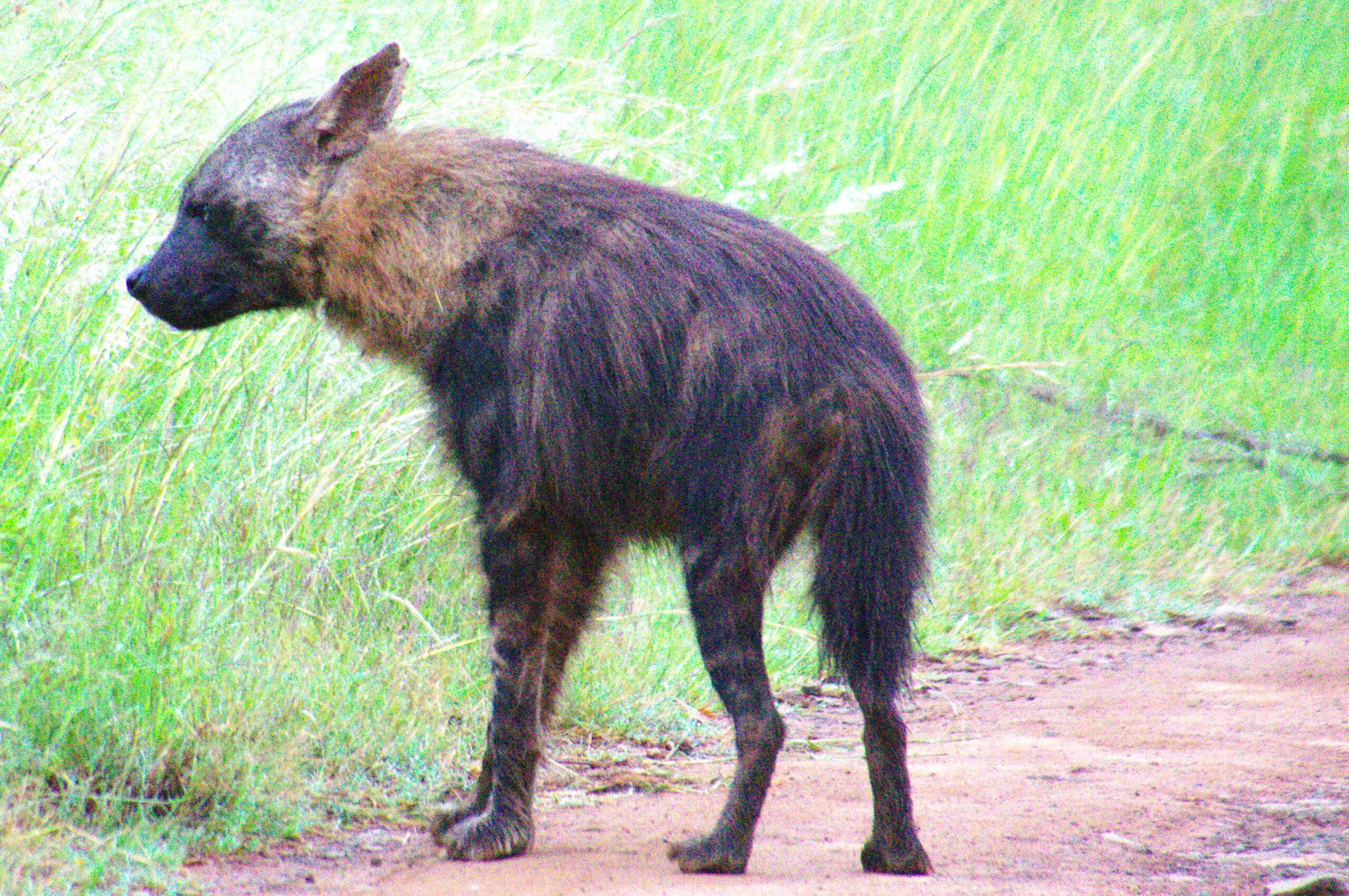
In contrast, the Brown Hyena is rarer and considerably more elusive. With its long, shaggy dark brown coat, lighter mane, and slightly more slender build, it has a distinctly rugged appearance. Its pointed ears and scruffy fur make it easy to distinguish from its spotted cousin.
Brown hyenas are primarily found in arid and semi-arid regions such as the Kalahari and Namib Desert, where survival requires remarkable adaptability. They live in much smaller clans and tend to forage alone, often travelling more than 30 kilometers in a single night in search of food.
Unlike the Spotted Hyena, the Brown Hyena relies more heavily on scavenging. While it may occasionally hunt small animals, its diet consists largely of carcasses left behind by larger predators, along with insects, fruits, and plant material. Along the Namibian coastline, brown hyenas have even been recorded feeding on seal carcasses washed ashore.
Because of their shy and predominantly nocturnal behaviour, sightings of Brown Hyenas are far less common. In many reserves, encountering one is considered a rare privilege.
Understanding the Differences
While both species share the same ecological niche as carnivores and scavengers, their lifestyles differ noticeably. The Spotted Hyena is larger, more muscular, and highly social, living in complex matriarchal clans and actively hunting much of its prey. It is also widespread across sub-Saharan Africa and frequently encountered on safari.
The Brown Hyena, by comparison, is smaller, shaggier in appearance, and more solitary in its movements. It occupies harsher, drier environments and depends primarily on scavenging rather than cooperative hunting. Its elusive nature makes sightings significantly rarer.
Despite these differences, both species fulfil a crucial ecological function.
Ecological Importance: Nature’s Cleanup Crew
Hyenas are among the most efficient recyclers in the African ecosystem. By consuming carcasses — including skin and bone — they prevent the spread of disease and ensure that nutrients are rapidly returned to the soil.
Very little goes to waste when a hyena is involved. Their digestive systems are capable of processing materials that most predators leave behind, contributing to overall ecosystem health and balance.
Without hyenas, the bush would function very differently. Their presence helps regulate prey populations, reduce environmental contamination, and maintain the natural order of predator and prey.
Changing the Narrative on World Hyena Day
World Hyena Day on 27 April serves as a reminder that conservation begins with understanding. By shifting the narrative away from outdated myths and toward ecological awareness, we gain a deeper respect for these remarkable animals.
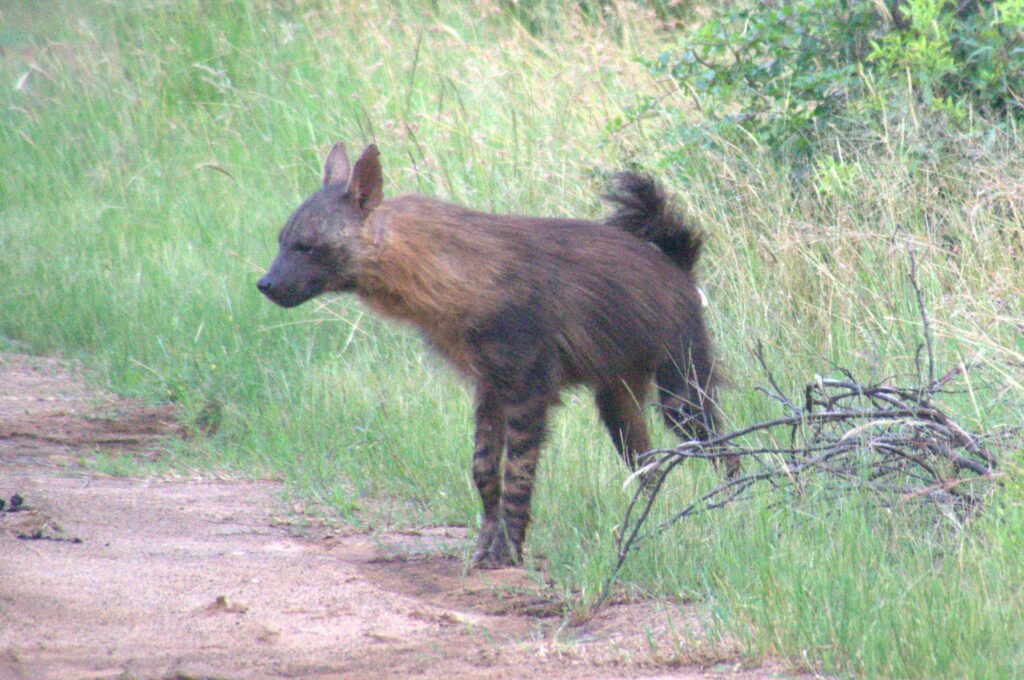
The next time you hear the haunting whoop of a Spotted Hyena echoing through the night, or if you are fortunate enough to encounter the elusive Brown Hyena on drive, remember that you are witnessing one of Africa’s most intelligent and ecologically important predators.
On this World Hyena Day, we celebrate not just their survival — but their essential role in keeping the wild truly wild.